


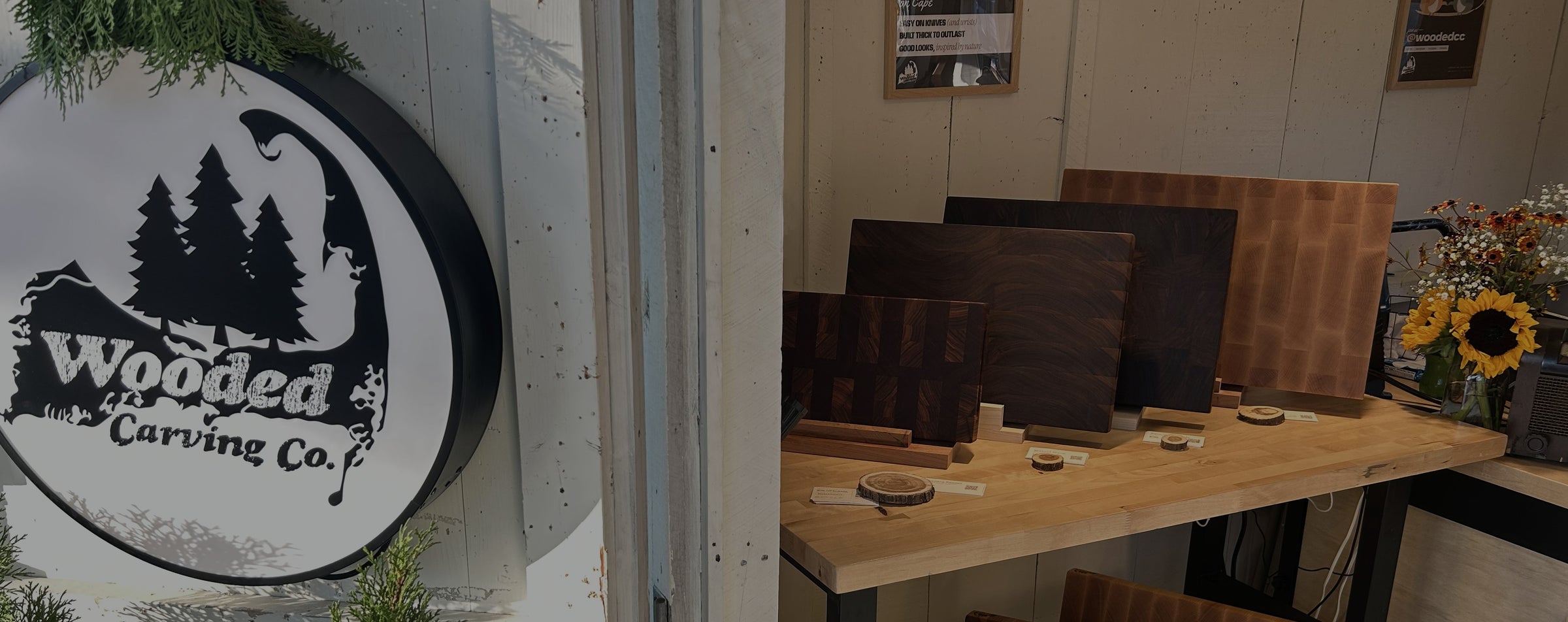
Single Edition walnut cutting boards.
Our flagship creations
These statement pieces are crafted and inspired from hardwood we hand-select for its visual character, and arrange into unique artisan butcher block boards.


The grain of one walnut log
Unique boards crafted from a single extra-wide piece of walnut, highlighting the character of a single log in an everyday-sized piece.


Walnut with more character
Cheerful one-off walnut pieces that don't quite fit our other collections, at relaxed prices.


They Got Wood!
Reactions from real Wooded customers.


Our Past Work
See some of our favorite boards from the recent past. While these one-of-a-kind pieces have found homes, they live on as creative inspiration.


We make good-looking wood that works.
Our boards are built to be more than just a hefty, high-quality hunk of utility. We believe they should be beautiful to look at, and individually distinctive.
That's why we take time to arrange each of them individually, taking inspiration from the shapes, colors and contrasts of the wood. We shape the look of each board by feel, first with a rough concept that morphs into a series of wood strips that we arrange to be expressive and visually interesting.
Each of these boards are too unique for a generic listing, so we name them and present them one-at-a-time. What you see is exactly what you get.

A butcher-block classic.
Walnut has been a kitchen wood for over a century — hard without being brittle, dense enough to last, and beautiful as it ages. Four reasons it's the right pick for end-grain.
Deep chocolate grain.
Heartwood that runs from rich brown to nearly purple, with streaks of cream sapwood. Walnut develops a soft patina with use. No two boards alike.
Knife-friendly hardness.
Hard enough to take decades of daily use, soft enough that your edges hold. Walnut sits in the sweet spot for end-grain — denser than cherry, gentler than maple.
Closed-pore stability.
Fine, even grain that holds end-grain glue lines tight. Walnut moves less with seasonal humidity than open-pored hardwoods, so the board stays flat over the long haul.
American hardwood.
Eastern black walnut, sourced from a New England hardwood supplier and hand-picked piece by piece. The same species pro butcher blocks have used for over a century.
Walnut, answered.
Why we use it, how it ages, and how to care for one.
Why walnut for cutting boards? +
Is walnut food-safe? +
How does walnut compare to maple or cherry? +
Will my walnut board darken or fade over time? +
How thick are your walnut boards? +
How do I care for a walnut end-grain board? +
How long does shipping take? +
Are end-grain boards dishwasher safe? +
Are these handmade walnut cutting boards? +
Picking the right walnut board?
Email or call — happy to help you find the size and grain that fits your kitchen.
Get in touch